
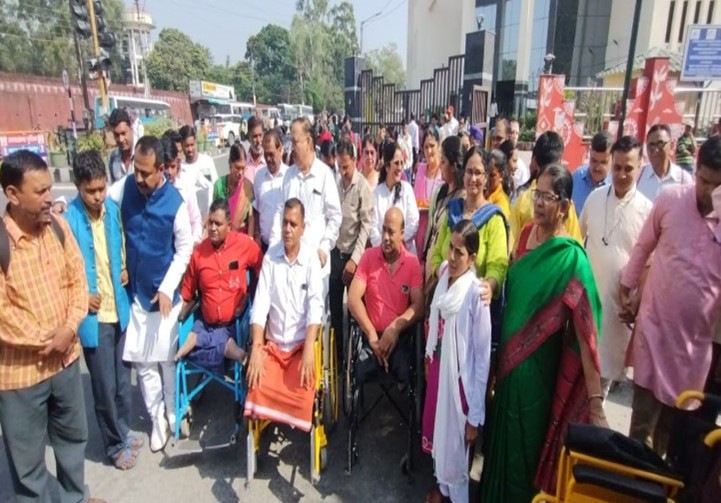
In the quiet villages of Uttarakhand, where mountains often limit mobility and opportunities, a silent transformation has been unfolding. For decades, the Rural Development Institute (RDI) has worked to ensure that Divyangjan are seen not through the lens of disability, but through the strength of their abilities. What began as a mission of rehabilitation has steadily evolved into a movement for dignity, confidence, and economic independence. The early years of RDI’s work focused on self-employment. In rural settings, where formal jobs are scarce and mobility can be challenging, self-driven enterprises offered a practical pathway. Vegetable carts rolled into local markets. Small daily-need shops opened at village crossroads. Cobbler toolkits restored not just shoes, but livelihoods. Sewing and Pico machines hummed inside modest homes, stitching together both fabric and hope. But these were never mere distributions of assets. Each individual underwent careful assessment, skill training, and continuous mentoring. The idea was simple yet powerful: sustainable income requires sustainable support. Over time, hundreds of Divyangjan moved from economic dependency to becoming contributing members of their famlies and communities. Confidence grew alongside income.
As years passed, a new aspiration emerged. Many educated young Divyangjan began expressing a different dream — not of running small enterprises, but of stepping into formal employment. They wanted structured workplaces, monthly salaries, professional identity, and social recognition. They sought to be part of the mainstream workforce. However, the path was not easy. Lack of awareness, complicated registration processes, digital barriers, and geographical isolation stood in the way. For many rural candidates, even reaching an employment office was a logistical challenge. Families, protective and cautious, often hesitated to let their children relocate for work. Recognizing this shift, RDI adapted. In collaboration with the National Career Service Centre (NCSC) for the differently abled, a focused effort began in 2024 to bridge rural talent with formal employment opportunities. The dedicated “Saksham Team” now travels to remote villages, identifies eligible candidates, assists with documentation, ensures digital registration, and prepares them for interviews. For many, this is their first formal step into the professional world.
The results are encouraging. Over 150 individuals have been supported under this initiative, with dozens completing formal registration and appearing for interviews. Several have secured placements in reputed organizations such as Amazon and Bajaj Finance — a milestone not only for them but for rural inclusion. Yet the journey is not only about jobs. It is about mindset. Families often struggle with letting their children live independently. To address this, RDI now emphasizes counselling for both candidates and parents, nurturing confidence and gradual independence.
The shift from skill support to formal employment reflects a deeper truth: empowerment is not static. It evolves with aspirations. When communities move from protection to empowerment, Divyangjan do not just participate — they excel. And in that excellence lies the promise of a more inclusive rural economy.