
In the picturesque yet geographically challenging state of Uttarakhand, access to basic healthcare remains uneven—especially in rural and tribal belts. Oral health, often overshadowed by other medical priorities, is one of the most neglected aspects of community well-being. According to national surveys and regional field observations, dental caries affect nearly 50–60% of school-aged children in rural India, and ground realities in Uttarakhand reflect a similar, if not higher, burden. Limited awareness, frequent consumption of sugary foods and tea, and lack of preventive care often turn minor dental issues into painful, chronic conditions. In many villages, dental care is sought only when discomfort becomes severe, highlighting the urgent need for early intervention.
Responding to this silent challenge, a series of Community Dental Health Camps were organized by the team from Rural Development Institute-HIHT, Swami Rama Himalayan University. These outreach initiatives aimed to promote preventive oral healthcare, enable early detection of dental conditions, and build awareness among rural school children—laying the foundation for healthier futures.
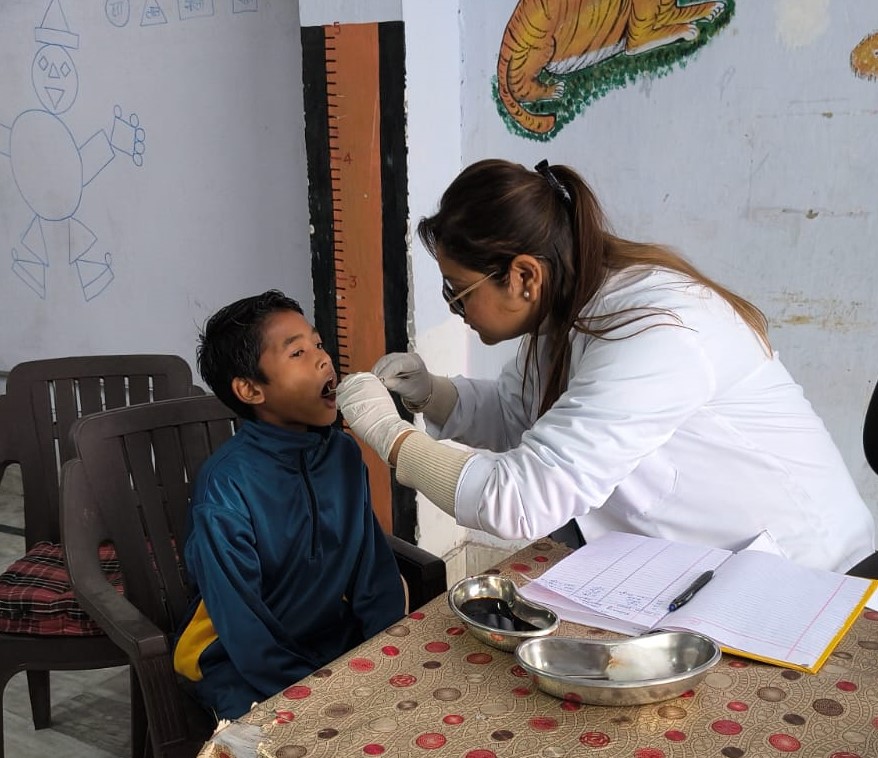
The camps covered multiple rural locations including Athoorwala, Gujjar Bastis, Lacchiwala, Laltappar, Hindolakhal, Itharna, and Nagthat, reaching more than 150 children. Comprehensive oral examinations were conducted to identify dental caries, plaque accumulation, gum inflammation, malocclusion, and other oral health concerns. For many children, this was their first dental screening—transforming classrooms into spaces of learning not just for academics, but for lifelong health practices.
A recurring concern observed across villages was the early introduction of tea and sweetened beverages in children’s diets, contributing to intrinsic stains and increased risk of dental caries. Limited awareness about proper brushing techniques, optimal toothpaste quantity, and the importance of brushing twice daily further compounded the problem. Through live demonstrations, children learned correct brushing methods using soft-bristled toothbrushes, while caregivers received guidance on supervising younger children and encouraging healthier dietary habits.
Interactive sessions emphasized the connection between oral health and overall well-being. Children were taught that healthy teeth support proper nutrition, clear speech, and self-confidence. Caregivers and teachers were engaged as partners, reinforcing the message that preventive care begins at home and in schools. Referral guidance was also provided for children requiring further treatment, ensuring continuity of care beyond the camps.
Across all locations, a consistent pattern emerged: untreated caries, plaque deposits, and inadequate oral hygiene practices were common, yet entirely preventable. In tribal areas, these issues were further compounded by context-specific challenges such as the early and frequent consumption of sweetened tea, limited use of toothbrushes and fluoridated toothpaste, reliance on traditional cleaning methods, and restricted access to dental care services due to geographic isolation. Low awareness about preventive oral health, coupled with delayed care-seeking behavior, often resulted in the progression of minor dental problems into more severe conditions. The camps demonstrated how community-based interventions can effectively bridge these knowledge and access gaps, fostering positive behavior change. Early detection, practical demonstrations, counselling, and referral support formed the cornerstone of this initiative.
Oral hygiene is not merely about clean teeth—it is fundamental to a child’s growth, learning, and confidence. Untreated dental problems can lead to pain, infection, school absenteeism, and long-term health complications. Preventive care in childhood is both cost-effective and transformative, particularly in underserved rural settings. More than clinical outreach, these camps were moments of trust-building. Children smiled shyly during examinations, teachers observed with interest, and parents listened with hope. Each interaction planted the seed of healthier habits and greater awareness.